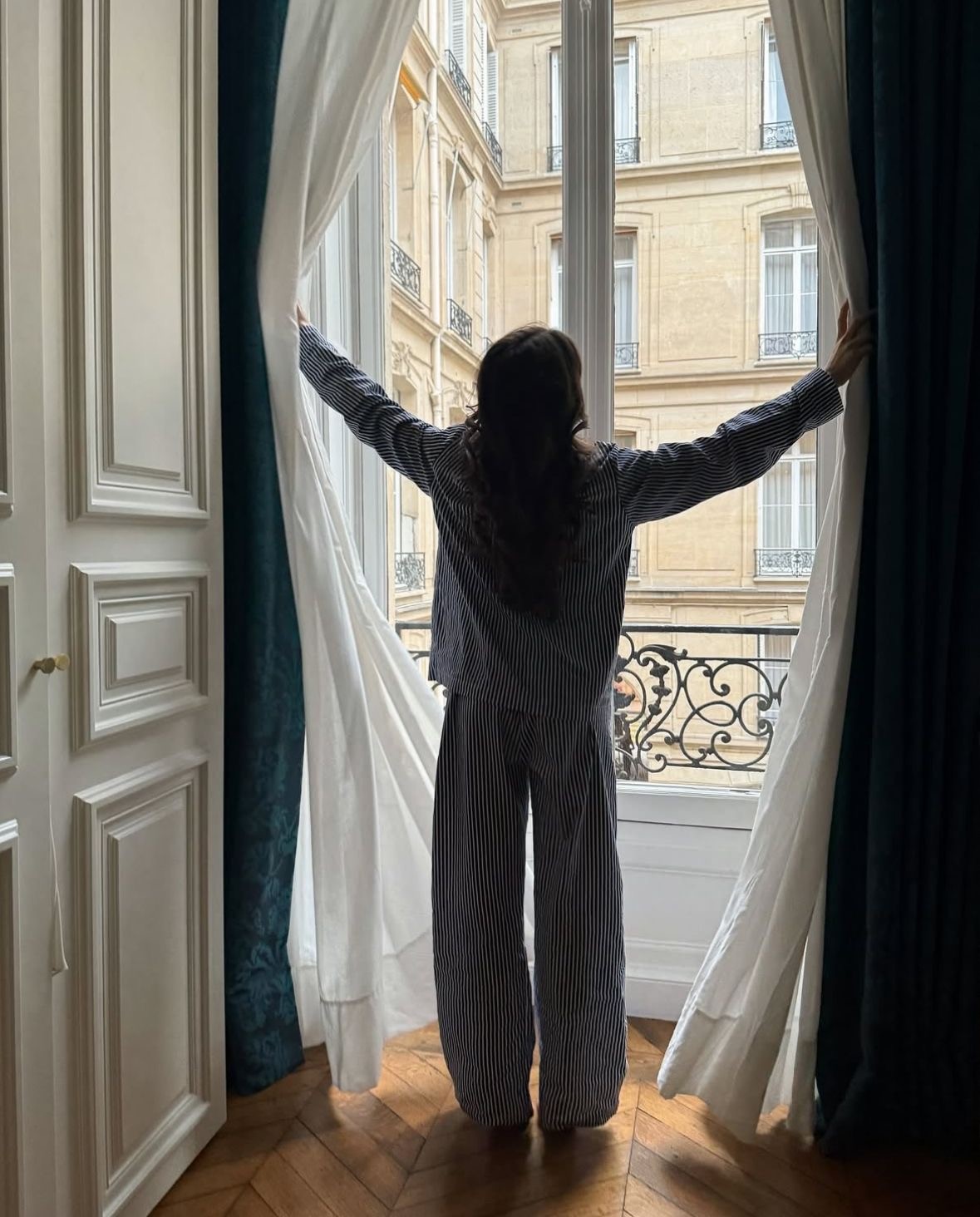
Anxiety called. We put it on mute
You wake up tired. Not sleepy-tired. Soul-tired.
Before your eyes are fully open, your mind is already scanning the day for problems that haven’t happened yet. Your jaw is tight. Your chest feels slightly heavy. You reach for your phone, not because you want to but because being alone with your thoughts for even a minute feels… loud.
This is how anxiety lives now. Quietly. Constantly. Disguised as normal.
Not as panic. Not as breakdowns. But as a life lived slightly on edge, all the time.
And the most unsettling part? You’ve gotten very good at functioning inside it.
You answer messages. You show up. You laugh. You go about your day. From the outside, you look calm, capable and completely in control.
Inside, your nervous system is running a never-ending emergency drill.
Anxiety doesn’t always feel like fear. Sometimes it feels like pressure.
Pressure to respond fast.
Pressure to do things right.
Pressure to not forget anything.
Pressure to be available.
Pressure to hold it all together.
So you move through your day with a subtle sense of urgency you can’t explain. You rush without needing to. You think ahead without wanting to. You replay conversations you wish you handled differently. You rehearse conversations that may never happen.
You call it overthinking.
Your body calls it survival.
Because anxiety is not a character flaw. It’s a nervous system that has been stuck in protection mode for too long.
And at some point, being “on” all the time started to feel like who you are.
But it’s not who you are. It’s what your body learned to do.
When your body forgets how to feel safe.
Here’s the part that changes everything:
Your body cannot tell the difference between a real threat and a thought.
An unanswered email.
A decision you have to make.
A message you didn’t expect.
A small mistake.
To your nervous system, these can feel just as threatening as actual danger.
So it responds the only way it knows how: by staying alert. All day. All night.
This is why you feel tired even when you’ve done “nothing.”
This is why relaxing feels uncomfortable.
This is why silence sometimes feels louder than noise.
Your body isn’t broken. It’s exhausted from trying to protect you.
Healing anxiety is surprisingly unimpressive.
We imagine healing as a breakthrough. A big realization. A dramatic shift.
But healing anxiety is quiet. Almost boring. Deeply unglamorous.
It looks like:
Sitting without your phone for five minutes and noticing how restless you feel.
Taking a deep breath and realizing you haven’t taken one all day.
Unclenching your jaw. Dropping your shoulders. Slowing your steps when you walk.
Tiny signals to your nervous system that say:
“You can stand down. We’re safe right now.”
And the more often you send that signal, the less often anxiety needs to scream for your attention.
The subtle ways anxiety shows up in daily life.
Not as panic but as:
• Constantly checking your phone.
• Feeling guilty when you rest.
• Getting irritated over small things.
• Struggling to make simple decisions.
• Feeling overwhelmed by minor tasks.
• Procrastinating because everything feels like too much.
• Overthinking how you come across to others.
Anxiety is loud in your mind and invisible to everyone else.
Which is why you start to think: Maybe this is just how I am.
It’s not.
It’s how you’ve been coping.
The gentle practices that actually lower anxiety.
Not productivity hacks. Not mindset tricks.
Body reminders.
1. Do one thing slowly every day.
Drink your coffee without multitasking. Walk without your phone. Shower without rushing. Slowness is unfamiliar to an anxious body and exactly what it needs.
2. Interrupt the thought spiral with the present moment.
Name five things you can see. Four you can touch. Three you can hear. Two you can smell. One you can taste. This brings your brain out of the future and back into now.
3. Move your body when your thoughts race.
Anxiety builds energy. Movement releases it. A short walk, stretching, shaking out your arms, it works faster than thinking your way out of it.
4. Stop answering every thought.
Not every worry deserves your attention. Some thoughts are just noise. Let them pass like background chatter.
5. Create micro-moments of safety.
A blanket. A cup of tea. Fresh air. Soft music. These are not luxuries. They are signals of safety to your nervous system.
What no one tells you about anxiety.
Anxiety often increases when you’re growing, changing or stepping into something new. Your brain interprets the unfamiliar as danger.
So instead of asking, “Why am I like this?” try asking,
“What is my body trying to protect me from?”
That question changes the conversation from frustration to compassion.
And anxiety softens in the presence of compassion.
You don’t need to be fixed. You need to feel safe.
Read that again.
You are not broken. You are not weak. You are not dramatic.
You are someone whose nervous system has been working overtime for a very long time.
And now it needs gentleness, not pressure. Slowness, not urgency. Permission, not expectations.
Calm is not something you achieve.
It’s something you allow.
By pausing. By breathing. By choosing not to rush when you don’t have to. By reminding yourself, again and again, that in this exact moment, nothing is wrong.
And one day, you’ll notice.
Your shoulders are lower.
Your breathing is deeper.
Your thoughts are quieter.
Not because life became easier. But because your body finally learned it doesn’t have to be on high alert all the time.
Anxiety may still visit.
But it no longer lives here.
And your body, for the first time in a long time, feels like a safe place to be.

